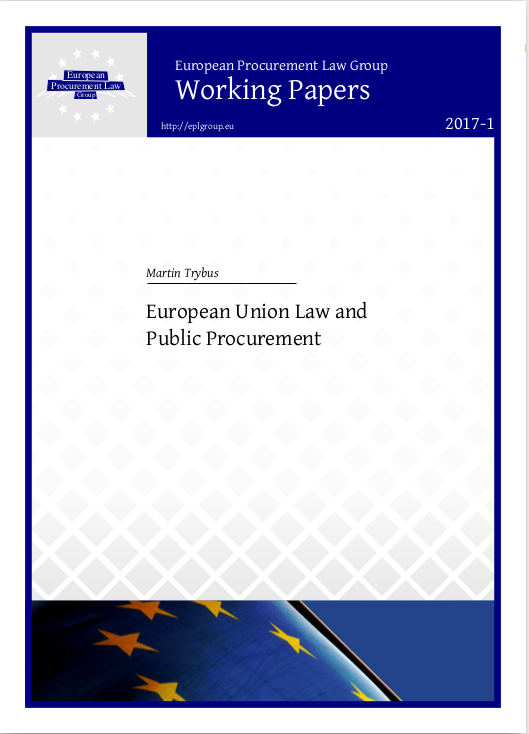
European Union Law and Public Procurement – Martin Trybus
This paper discusses the law of the European Union (EU) on public procurement by providing an overview of both the primary law principles and foundations emanating from the Treaty on the Functioning of the European Union (TFEU) and the detailed rules of a set of secondary procurement Directives. The latter have to be transposed into the national laws of the 28 Member States and are then applied by their contracting authorities and entities. The analysis also includes the relevant case law of the Court of Justice of the European Union (CJEU) and a short evaluation of the principles applying to contracts falling outside the field of application of the…
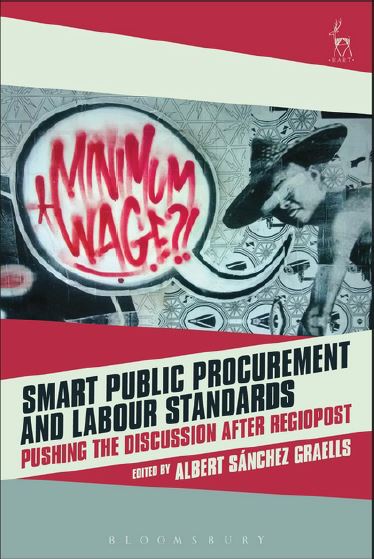
Smart Public Procurement and Labour Standards
Smart Public Procurement and Labour Standards. Pushing the Discussion after RegioPost (Bloomsbury, 2018). Edited by Albert Sánchez Graells, with contributions by Piotr Bogdanowicz and Roberto Caranta Smart procurement aims to leverage public buying power in pursuit of social, environmental and innovation goals. Socially-orientated smart procurement has been a controversial issue under EU law. The extent to which the Court of Justice (ECJ) has supported or rather constrained its development has been intensely debated by academics and practitioners alike. After the slow development of a seemingly permissive approach, the ECJ case law reached an apparent turning point a decade ago in the often criticised judgments in Rüffert and Laval, which left a number of open questions.…
Characteristics of Separate Operational Units – A Study on Aggregation Rules under Public Procurement Law
The principle of effectiveness is one of the fundamental principles in EU law. Even though the principle ensures the effectiveness of all EU legislation, it also has a key role in the interpretation of EU procurement rules. The Cour of Justice of the European Union has often address the principle of effectiveness in its case law and has consistently held that, in the absence of EU rules governing the matter, it is for every member state to lay down the detailed rules of administrative and judicial procedures for safeguarding rights, which individuals derive from EU law.
The Application of the Principle of Proportionality to Modifications of Public Contracts
The rules regarding modifications of public contracts were added to EU public procurement law in 2014 in order to clarify the conditions set forth by the relevant case law of the Court of Justice of the European Union. However, the provisions that were ultimately adopted are not quite black and white as one might think. One of the grey areas might be the application of the principle of proportionality to modifications of public contracts. New directives mention proportionality as a principle of “procurement”. This article presents a view that contracting authorities shall act in a proportionate manner also after the “procurement” decision has been made, i.e. when a contract…
Reformation or Deformation of the EU Public Procurement Rules
Using an innovative ‘law and political science’ methodology, this timely book carries out a critical assessment of the reform of the EU public procurement rules. It provides a rich account of the policy directions and the spaces for national regulatory decisions in the transposition of the 2014 Public Procurement Package, as well as areas of uncertainty and indications on how to interpret the rules in order to make them operational in practice. Edited by Grith Skovgaard Ølykke, Albert Sanchez-Graells http://www.e-elgar.com/shop/reformation-or-deformation-of-the-eu-public-procurement-rules
Research Handbook on EU Public Procurement Law
The Research Handbook on EU Public Procurement Law makes a major contribution to our understanding of the EU public procurement regime, at a time when it is being implemented by the EU Member States, and of the pivotal role that this will play for the delivery of the European 2020 Growth Strategy. The internal market relies on a simplified regime in the European Union, which will result from procedural efficiencies and from streamlining the application of the substantive rules. The Research Handbook has comprehensive thematic coverage which includes: public procurement regulation, strategic procurement, justiciability in public procurement, public procurement and competition and public procurement and public service.
Qualification, Selection and Exclusion in EU Procurement
Qualification featured prominently in numerous public procurement disputes in the EU as it is of crucial importance to the outcome of EU tender procedures. This volume supplements the previous volume in the Series on the award phase. The book also considers the implications of the new Public Sector Directive 2014/24/EU with regard to the qualification phase, and provides an analysis of the implementation of the new Directive in a range of Member States. The publication is unique as it is based on a comparative approach covering diversified national approaches to EU public procurement law. Access the full e-book here: Qualification, Selection and Exclusion in EU Procurement.
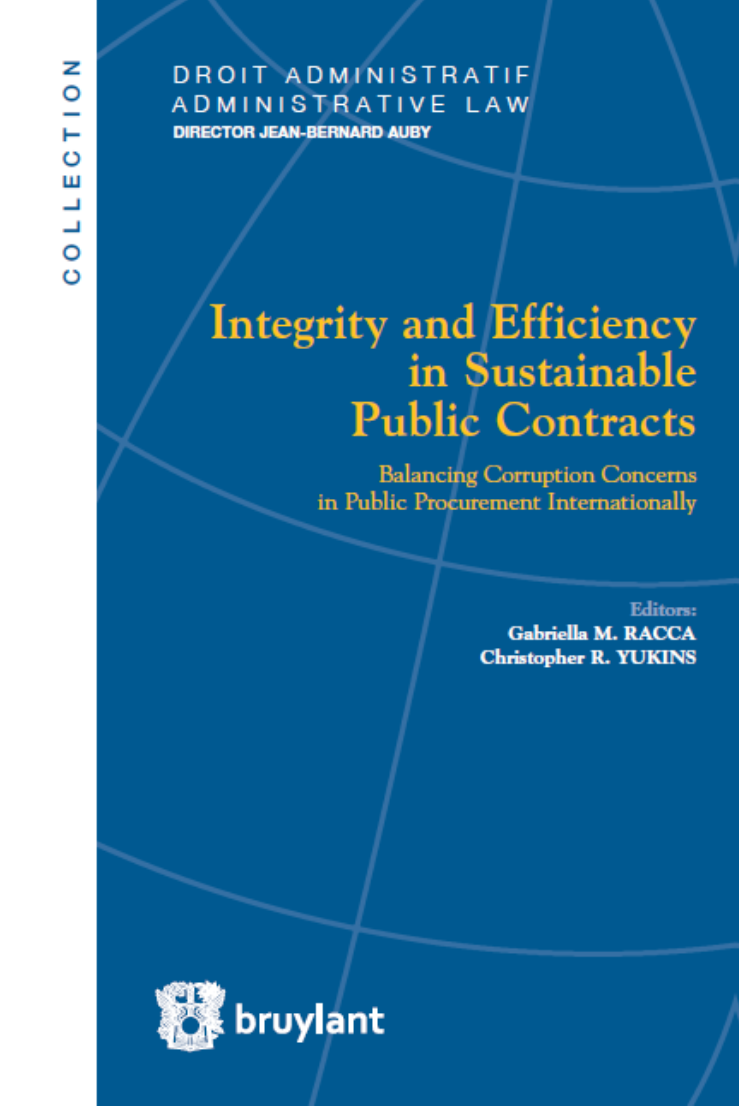
Integrity and Efficiency in Sustainable Public Contracts.
Balancing Corruption Concerns in Public Procurement Internationally “Ensuring efficiency and integrity throughout the public procurement cycle is essential to a sound allocation of taxpayers’ money. Yet public contracts are plagued by corruption, collusion, favoritism and conflicts of interest. This book addresses these problems from sophisticated, academic, institutional and practical perspectives. The book’s ambition is to shape the public debate in the procurement community by highlighting how corruption implies violations of fundamental rights and undermines the fiduciary relationship between citizens and public institutions. The analysis underlines how corruption may stem from – and yet be resolved – through the exercise of discretion in the public procurement system. Focusing on the…
Disclosure Rules In EU Public Procurement – Balancing Between Competition and Transparency
K-M.Halonen, Disclosure Rules In EU Public Procurement – Balancing Between Competition and Transparency, peer-reviewed, the Journal of Public Procurement, Vol. 16, Number 4, Winter 2016, pp. 528–553.
Is the remedy of contractual ineffectiveness truly effective in Finland?
The principle of effectiveness is one of the fundamental principles in EU law. Even though the principle ensures the effectiveness of all EU legislation, it also has a key role in the interpretation of EU procurement rules. The Cour of Justice of the European Union has often address the principle of effectiveness in its case law and has consistently held that, in the absence of EU rules governing the matter, it is for every member state to lay down the detailed rules of administrative and judicial procedures for safeguarding rights, which individuals derive from EU law.